

Content Marketing: The Foundation of Successful Digital Marketing
In today’s digital world, consumers are constantly exposed to advertisements, promotional emails, and social media campaigns. With so much competition for attention, businesses can no longer rely solely on traditional advertising methods. Instead, they need to provide value, build trust, and create meaningful relationships with their audience.
Content marketing is one of the most effective digital marketing strategies because it focuses on educating, entertaining, and engaging customers rather than directly selling products or services. Whether you’re a startup, a small business, or a multinational company, investing in quality content can significantly improve your brand visibility, customer loyalty, and revenue.
What Is Content Marketing
Content marketing is the strategic process of creating, publishing, and distributing relevant,valuable and consistent content to attract and retain a clearly defined audience. The primary goal is to encourage profitable customer actions by offering useful information instead of aggressive sales messages.
Unlike traditional advertising, content marketing builds trust over time. When businesses consistently provide helpful content, customers begin to view them as reliable sources of information, making them more likely to purchase products or services when the need arises.
Why Content Marketing Matters
The internet has changed how people make purchasing decisions. Before buying a product or hiring a service, most consumers search online for reviews, comparisons, tutorials, and recommendations. Businesses that provide high-quality content are more likely to appear in search results and influence customer decisions.
Some major benefits of content marketing include:
- Increasing brand awareness
- Building customer trust and credibility
- Improving search engine rankings (SEO)
- Generating high-quality leads
- Boosting website traffic
- Supporting social media marketing efforts
- Increasing customer engagement
- Improving conversion rates
- Encouraging long-term customer loyalty
Because content continues to attract visitors long after it is published, it provides lasting value compared to short-term advertising campaigns.
Types of Content Marketing
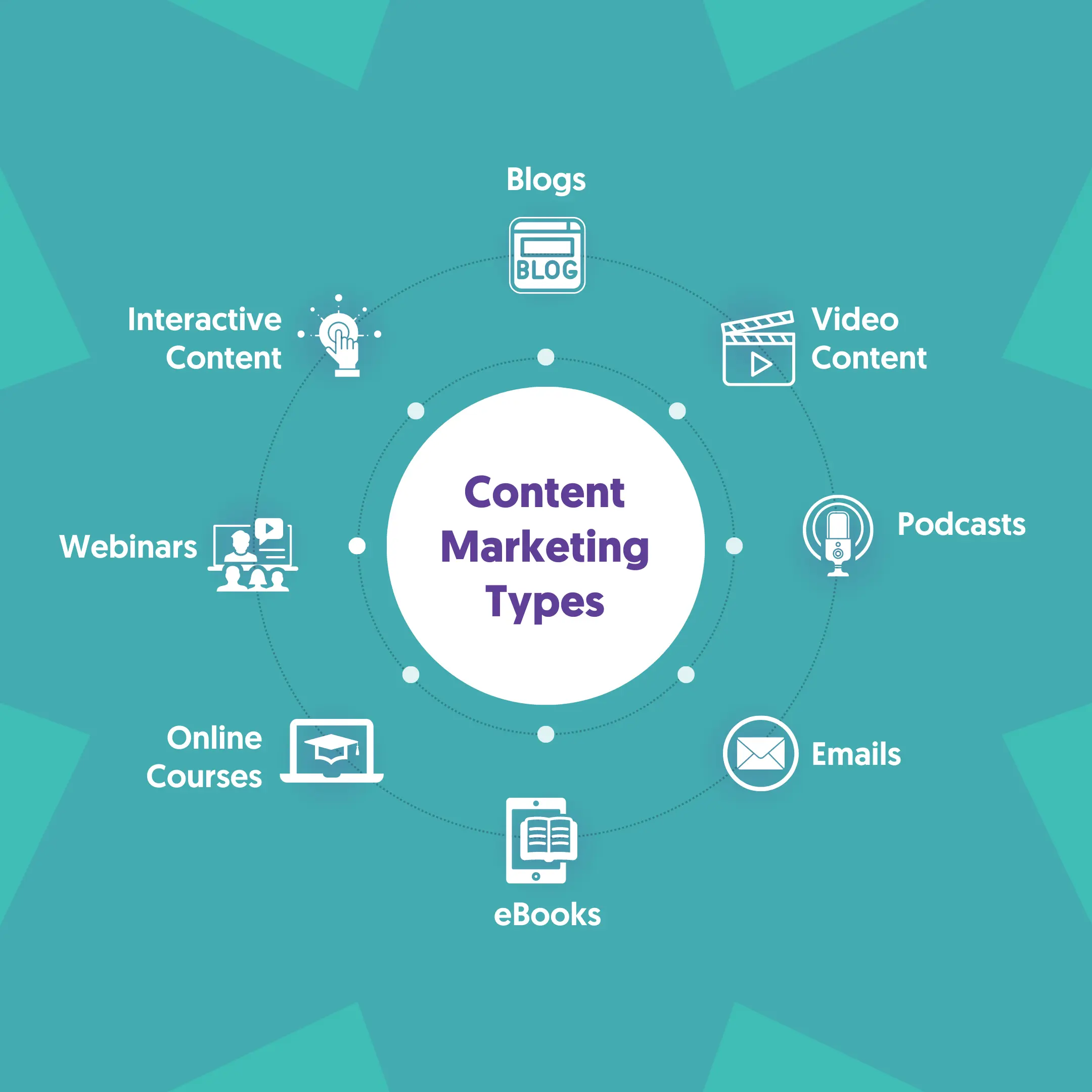
Businesses use different types of content depending on their audience and marketing objectives.
1. Blog Posts
Blogs are one of the most popular forms of content marketing. Regularly publishing informative articles helps answer customer questions, improve SEO, and establish authority within an industry.
2. Videos
Video content has become growing popular because it is engaging and very easy to consume. Tutorials, product demonstrations, interviews, webinars, and behind-the-scenes videos help businesses connect with their audience.
3. Social Media Content
Platforms such as Instagram, Facebook, LinkedIn, X, and TikTok allow businesses to share educational posts, short videos, infographics, and customer stories that encourage interaction and brand recognition.
4. Infographics
Infographics present complex information in a visually appealing format. They simplify statistics, processes, and comparisons, making them easy for audiences to understand and share.
5. E-books and Guides
Long-form resources such as white papers, e-books and comprehensive guides provide in-depth knowledge while helping businesses generate through downloads and email sign-ups.
6. Email Newsletters
Email marketing remains one of the highest-return digital marketing channels. Regular newsletters keep subscribers informed about new products, industry trends, and valuable resources.
7. Podcasts
Podcasts have become a popular way to educate and engage audiences. Businesses use them to discuss industry trends, interview experts, and build stronger relationships with listeners.
Content Marketing Strategy
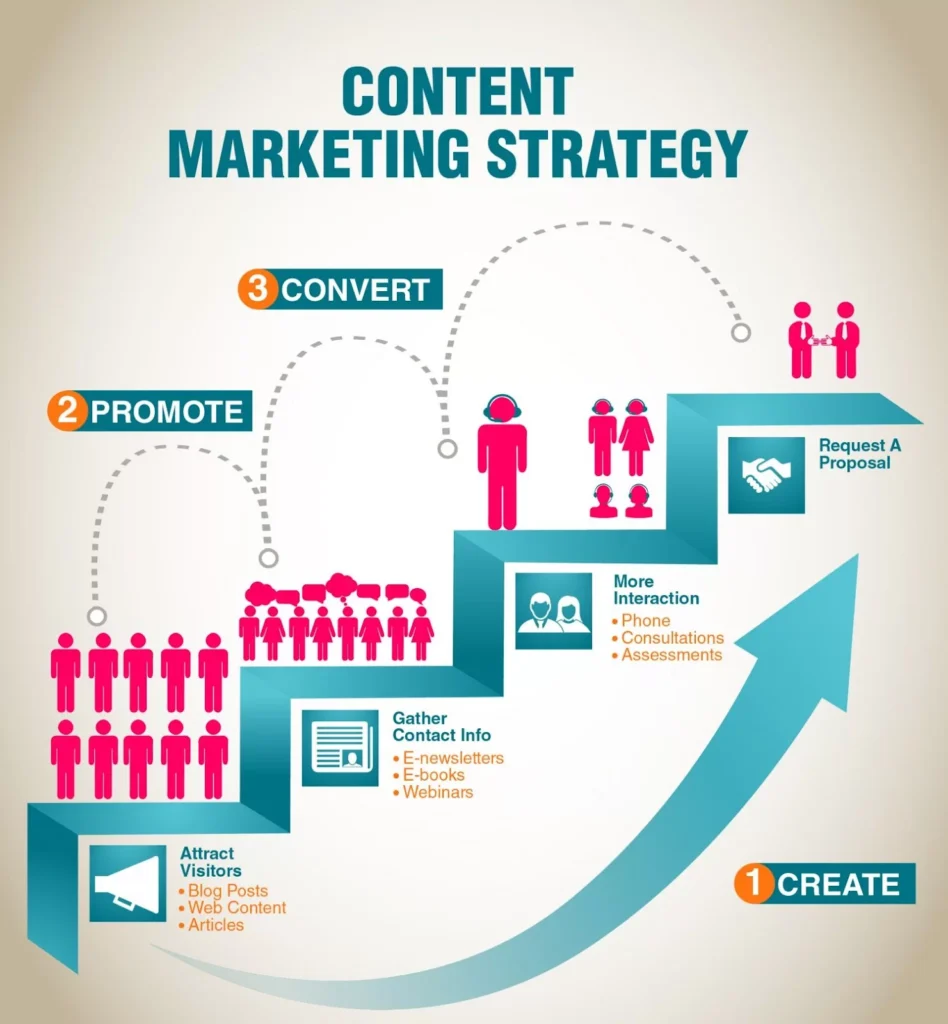
A successful content marketing campaign requires careful planning rather than simply publishing random articles or social media posts.
Define Your Goals
Businesses should identify what they want to achieve. Common objectives include increasing website traffic, generating leads, improving brand awareness, boosting sales, or building customer loyalty.
Understand Your Audience
Knowing your target audience is essential. Research customer demographics, interests, challenges, online behavior, and purchasing habits to create content that addresses their specific needs.
Conduct Keyword Research
Keyword research helps to identify the terms people search for online. With the use of these keywords naturally within content improves search engine visibility and attracts relevant visitors.
Create High-Quality Content
Effective content should be informative, accurate, engaging, and easy to understand. It should solve problems, answer questions, or provide useful insights rather than simply promoting products.
Publish Consistently
Consistency helps maintain audience interest and signals reliability. Businesses often create a content calendar to organize publishing schedules and ensure a steady flow of valuable content.
Promote Your Content
Creating excellent content is only part of the process. Businesses should also distribute it through social media, email campaigns, search engine optimization, influencer collaborations, and online communities to maximize its reach.
Measure Performance
Tracking key performance indicators (KPIs) helps evaluate success. Common metrics include website traffic, page views, bounce rate, social shares, engagement, conversion rate, email open rate, and return on investment (ROI).
Best Practices for Effective Content Marketing
To maximize results, businesses should follow several good practices:
- Focus on solving customer problems rather than making constant sales pitches.
- Write clear, engaging, and easy-to-read content.
- Use compelling headlines to capture attention.
- Include visuals such as images, charts, and videos to improve engagement.
- Ensure all information is accurate and accurate.
- Add clear calls to action that guide readers toward the next step.
- Update older content regularly to keep it relevant.
Challenges in Content Marketing
Although content marketing offers significant benefits, it also presents several challenges.
Producing high-quality content consistently needs time, creativity, and resources. Competition is intense, making it difficult for businesses to stand out. Search engine algorithms frequently change, requiring marketers to adapt their SEO strategies. Measuring long-term results can also be challenging because content marketing often delivers gradual rather than immediate returns.
Despite these challenges, businesses that remain consistent and customer-focused usually achieve sustainable growth over time.
The Future of Content Marketing
Technology continues to reshape content marketing. Artificial intelligence assists with content research, writing, personalization, and data analysis. Voice search optimization, interactive content, augmented reality experiences, and short-form video content are becoming increasingly important.
Consumers also expect personalized experiences tailored to their interests and behaviors. Businesses that combine data-driven insights with authentic storytelling will be better positioned to build lasting customer relationships.
Conclusion
Content marketing has become one of the most valuable tools in digital marketing. Instead of interrupting consumers with advertisements, it attracts them by providing useful, relevant, and engaging information. From blog posts and videos to podcasts and email newsletters, quality content helps businesses build trust, improve search engine visibility, generate leads, and increase customer loyalty.
Success in content marketing requires understanding your audience, creating valuable content consistently, promoting it effectively, and measuring performance to refine your strategy. As digital platforms continue to evolve, businesses that prioritize informative, customer-focused content will be better equipped to grow their online presence and achieve long-term success.
Ultimately, content marketing is not just about creating content—it is about creating meaningful experiences that educate, inspire, and build lasting relationships with customers.