

Search Engine Optimization (SEO)
Search Engine Optimization (SEO) is the practice of improving a website so that it ranks higher in search engine results pages (SERPs) on platforms like Google and Bing. The primary goal of SEO is to increase a website’s visibility, attract organic (non-paid) traffic, and provide users with relevant, high-quality content that matches their search intent.
In today’s digital landscape, millions of people use search engines every day to find information, products, and services. Whether someone is searching for a nearby restaurant, researching a product, or looking for expert advice, search engines aim to deliver the most relevant and trustworthy results. SEO helps businesses optimize their websites to meet these standards, making it easier for potential customers to discover them online.
SEO involves a combination of strategies, including keyword research, high-quality content creation, on-page optimization, technical improvements, and link building. These efforts work together to enhance a website’s user experience, improve its credibility, and increase its chances of appearing at the top of search results.
Unlike paid advertising, SEO focuses on earning long-term organic traffic. Although it requires time and consistent effort, a well-executed SEO strategy can deliver sustainable results, improve brand visibility, generate qualified leads, and increase conversions. As search engine algorithms continue to evolve, businesses that prioritize SEO are better positioned to stay competitive and reach their target audience effectively.
Whether you run a personal blog, an e-commerce store, or a corporate website, understanding the fundamentals of SEO is essential for building a strong online presence and achieving long-term digital success.
How Search Engine Optimization Works
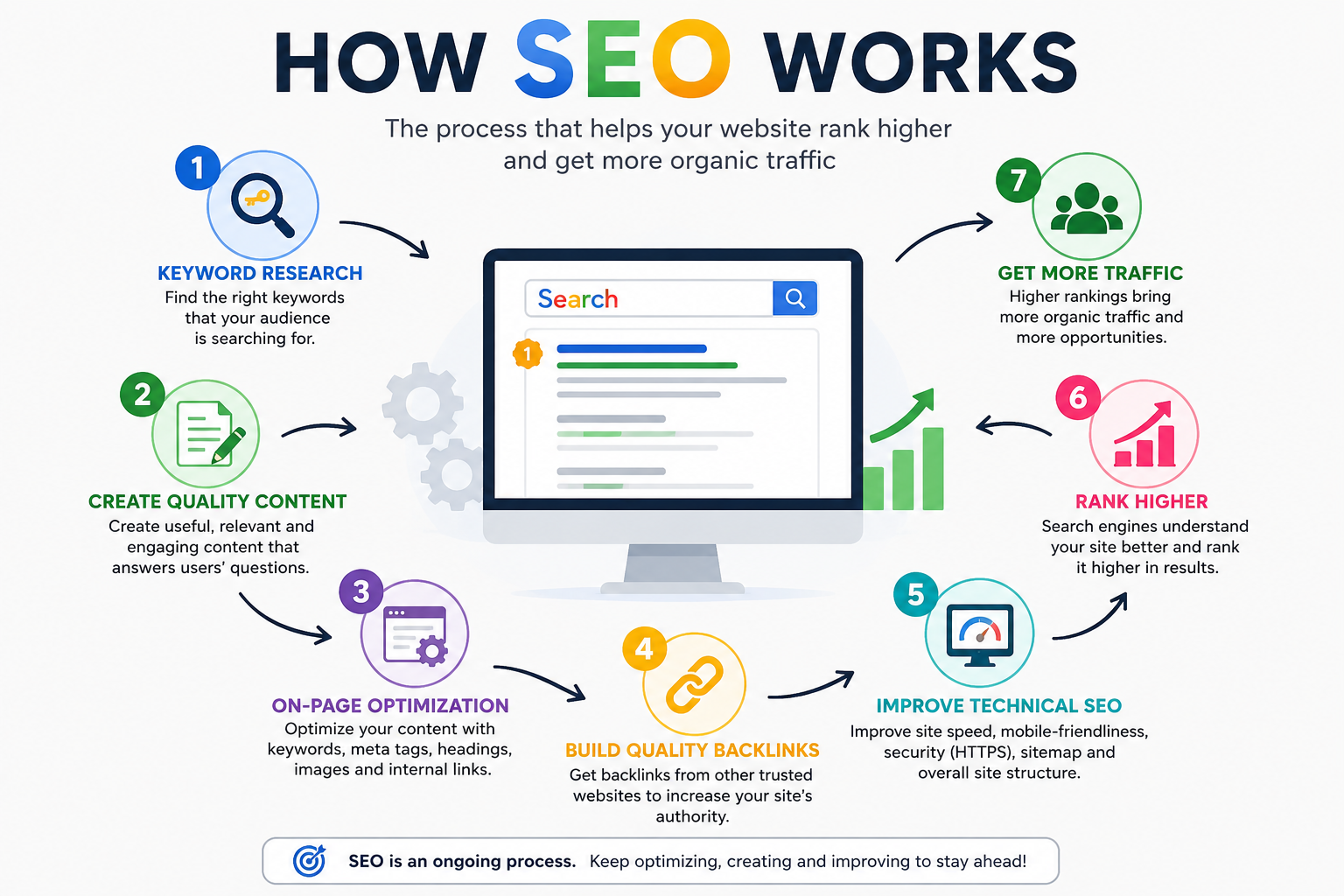
Search Engine Optimization (SEO) works by helping search engines understand your website’s content so they can display it to users searching for relevant information. Search engines such as Google use automated programs called crawlers or spiders to discover, analyze, and index web pages. When someone enters a search query, the search engine evaluates billions of indexed pages and ranks them based on relevance, quality, and user experience.
The SEO process can be broken down into three main stages: crawling, indexing, and ranking.
1. Crawling
The first step is crawling. Search engines use bots to scan the internet and discover new or updated web pages by following links from one page to another.
During crawling, search engine bots:
- Visit websites.
- Follow internal and external links.
- Discover new pages.
- Check for updated content.
2. Indexing
During indexing, search engines evaluate:
- Page titles
- Headings
- Keywords
- Images and videos
- Meta descriptions
- Internal links
- Content quality
- Website structure
If a page meets the search engine’s quality standards, it is added to the index and becomes eligible to appear in search results.
3. Ranking
When a user searches for something, the search engine scans its index and ranks pages based on hundreds of factors to determine which results are the most relevant.
Some important ranking factors include:
- Relevance to the search query
- Content quality and originality
- Keyword optimization
- Website loading speed
- Mobile-friendliness
- User experience (UX)
- Website security (HTTPS)
- Backlinks from trusted websites
- Page authority
- Search intent
Key Components of Search Engine Optimization
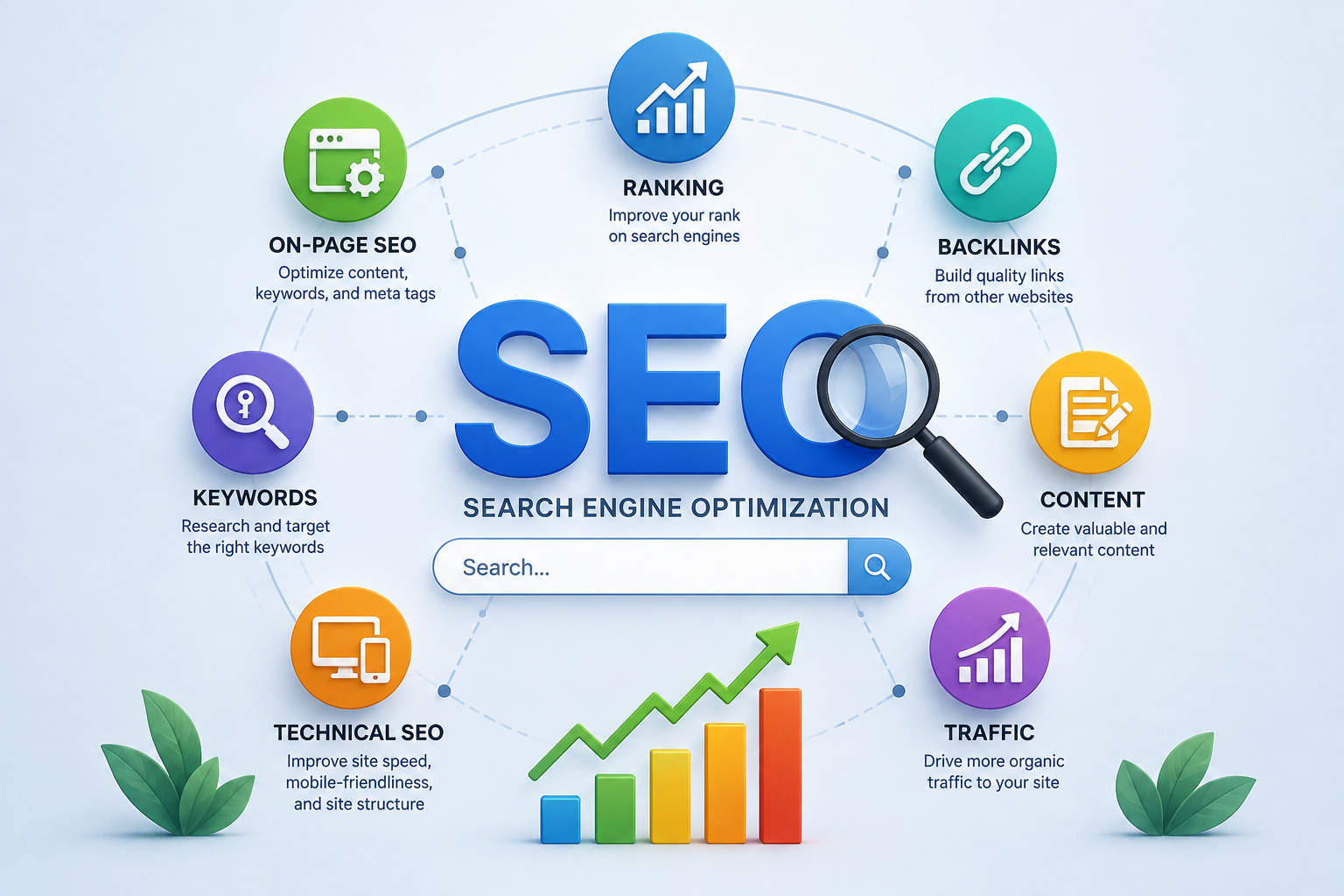
On-Page Search Engine Optimization
On-page SEO optimize on optimizing elements within your website.
Examples include:
- Using relevant keywords naturally
- Writing compelling title tags and meta descriptions
- Optimizing headings (H1, H2, H3)
- Creating high-quality content
- Optimizing images with alt text
- Adding internal links
- Improving readability
Off-Page Search Engine Optimization
Common off-page SEO strategies include:
- Earning backlinks from reputable websites
- Social media promotion
- Guest blogging
- Brand mentions
- Online reviews
Technical Search Engine Optimization
Technical SEO ensures that search engines will be efficiently crawl, index, and understand your website.
Important technical SEO practices include:
- Improving website speed
- Making the site mobile-friendly
- Using HTTPS for security
- Creating XML sitemaps
- Fixing broken links
- Improving URL structure
- Using structured data (schema markup)
How Keywords Help Search Engine Optimization
Keywords are the words and phrases users type into search engines. SEO contains identifying these keywords.
For example:
Search Query: Best running shoes for beginners
A well-optimized article with this keyword is more likely to appear in search results if it provides helpful and relevant information.
However, modern SEO prioritizes search intent over simply repeating keywords. Content should answer the user’s question thoroughly and naturally.
Why Content Is Important
High-quality content is the foundation of SEO. Search engines favor content that:
- Answers users’ questions
- Is original and informative
- Is regularly updated
- Includes relevant keywords naturally
- Provides value to readers
Examples of SEO-friendly content include:
- Blog posts
- How-to guides
- Product pages
- Tutorials
- FAQs
- Videos
- Infographics
How Backlinks Improve Search Engine Optimization
They act as “votes of confidence,” indicating that your content is valuable and trustworthy.
For example, if a respected industry blog links to your article, search engines may view your content as more authoritative, which can improve its rankings.
Quality matters more than quantity—links from reputable websites carry more weight than links from low-quality or unrelated sites.
User Experience and Search Engine Optimization
Search engines also consider how users interact with your website. A positive user experience can contribute to better search performance.
Factors include:
- Fast loading times
- Mobile responsiveness
- Easy navigation
- Clear page structure
- Readable content
- Low bounce rates
- Secure browsing (HTTPS)
Example of How Search Engine Optimization Works
Imagine you own an online bakery and publish a blog titled “How to Bake Chocolate Cake at Home.”
To optimize the page, you:
- Use the keyword “how to bake chocolate cake.”
- Write detailed, helpful instructions.
- Add optimized images with descriptive alt text.
- Include internal links to related recipes.
- Ensure the page loads quickly and works well on mobile devices.
- Earn backlinks from food bloggers.
When someone searches for “how to bake chocolate cake at home,” search engines crawl and index your page. If it is relevant, high-quality, and authoritative, it has a better chance of ranking prominently in the search results.
Conclusion
SEO works by helping search engines crawl, index, and rank your website so that it appears in relevant search results. By combining high-quality content, keyword optimization, technical improvements, strong backlinks, and a great user experience, businesses can increase their visibility, attract organic traffic, and build long-term online success.. As search engines update their algorithms and user behavior evolves, regularly optimizing your website and creating valuable content will help maintain and improve your search rankings over time.